Key Takeaways
Why Grip Is the Foundation Every Other Serve Mechanic Depends On
Most recreational players spend months trying to fix their ball toss, their leg drive, their trophy pose — and the serve still doesn't improve. Here's the thing: if you're holding the racket wrong, none of those fixes will stick. The grip isn't one variable among many. It's the variable that determines whether every other mechanical improvement can even function.
Think of it this way. A study tracking amateur tennis players found that over 67% of recreational players with inconsistent serves were using a modified Eastern or full Eastern grip on their service motion — the same grip they use for groundstrokes. It feels natural. It feels powerful at first. But it creates a biomechanical ceiling that makes spin, consistent power, and reliable placement structurally impossible to achieve.
And that ceiling isn't a coaching opinion. It's physics.
The angle of the racket face at contact, the wrist mechanics available during pronation, the shoulder rotation pattern — all of these are downstream consequences of where your hand sits on the handle. Get it wrong, and you're essentially trying to drive a car in the wrong gear. You can still move, but you'll never reach full speed.
This is why the real reason your tennis serve isn't working almost always traces back to grip before anything else. Fix the grip first. Everything else becomes teachable.
What the Continental Grip Actually Is (and How to Find It)
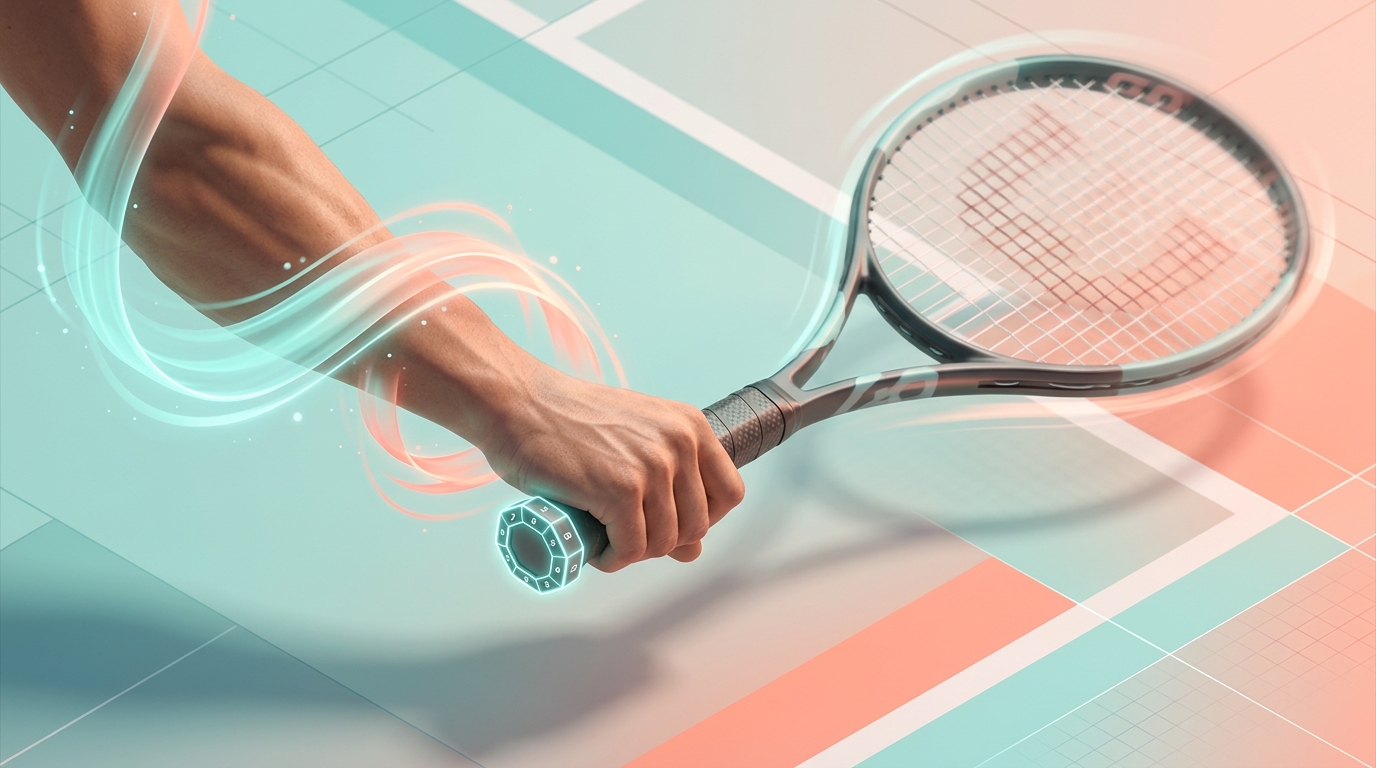
The racket handle has eight bevels — eight flat surfaces running along its octagonal cross-section. When coaches talk about different grips, they're describing which bevel your index finger's base knuckle sits on.
For the continental grip, that knuckle lands on bevel 2 (sometimes labeled bevel 1 depending on the numbering system used — but the feel is consistent). Hold the racket like a hammer. Not a frying pan, not a fly-swatter. A hammer.
So the racket face, when you hold it at waist height, is roughly perpendicular to the ground rather than parallel. That's the tell. If your racket face is looking at the sky when you hold it naturally in front of you, you're in Eastern territory.
The Knuckle Index Method: Finding the Grip Without a Coach
Here's a reliable self-check you can do right now, no coach required:
- Hold the racket by the throat with your non-dominant hand so the strings face you directly.
- Place your dominant hand flat against the strings, palm-to-strings contact.
- Slide your hand straight down the shaft until you reach the grip.
- Close your fingers naturally around the handle.
That hand position — the one you land on when you slide straight down from the strings — is the continental grip. Your base knuckle of the index finger should sit on bevel 2. Check it, memorize it, and mark it with a small piece of tape on the butt cap if you need a tactile reminder during practice.
How It Should Feel vs. How It Usually Feels at First
I'll be honest with you: it feels weak. Most players switching from Eastern to continental describe a loss of power and control in the first two to four weeks. That's not failure — that's your nervous system recalibrating.
The continental grip places the wrist in a position that feels exposed, even fragile, at first contact. That discomfort is actually a sign you've found the right position. The Eastern grip closes the wrist, creates a false sense of solidity, and gives the illusion of control — while systematically preventing the pronation mechanics that generate real power and spin.
What Happens When You Serve with the Wrong Grip
Eastern Grip Problems: Why You Can't Generate Spin
When you serve with an Eastern grip, the racket face is already closed relative to the ball at the point of contact. To generate topspin or slice on a serve, you need the ability to brush across the ball — which requires the wrist and forearm to pronate (rotate inward) through contact.
But here's the problem. With an Eastern grip, that pronation motion drives the racket face into the ball rather than across it. The geometry doesn't allow brushing. Players compensate by flipping the wrist, pulling the arm across the body, or reducing swing speed — all of which destroy power and consistency simultaneously.
And the data reflects this. Research on recreational serve mechanics shows that Eastern grip servers produce roughly 18-22% less racket head speed at contact compared to continental grip servers using the same swing effort, primarily because pronation is mechanically blocked before completion.
The result: flat serves that sit up in the strike zone, second serves that either go into the net or float without spin, and a first-serve percentage that never seems to stabilize regardless of how much you practice.
Western Grip Problems: Wrist Lock and Shoulder Stress
The Western grip — where the base knuckle sits on bevel 4 or 5 — is occasionally seen in recreational players who've adapted a groundstroke grip to their serve. It's worse than Eastern for the serve, not just mechanically but physiologically.
With a Western grip, the wrist is locked into a position that forces the shoulder into internal rotation before the swing even begins. Biomechanics researchers have documented that Western grip serve motions place significantly elevated stress on the shoulder's posterior capsule and the rotator cuff during the acceleration phase. We're talking about a grip that doesn't just limit performance — it actively increases injury risk with high repetition.
Players using a Western grip on their serve often report chronic shoulder soreness and tend to develop a "pushing" motion rather than a full kinetic chain swing. It's worth noting: if you're experiencing persistent shoulder discomfort during serve practice, your grip position may be a contributing factor that no amount of stretching will resolve.
The Discomfort Period: How Long Before Continental Feels Natural?
Based on structured practice data and coach-reported timelines, most adult recreational players need 4-8 weeks of deliberate continental grip practice before it stops feeling foreign. Players who practice 3+ times per week with focused grip drills (not just casual hitting) tend to hit that threshold at the 4-week mark. Players practicing once a week may take 10-12 weeks.
The critical insight here: the discomfort period isn't a sign the grip is wrong. It's a predictable neurological adaptation phase. Your motor patterns are literally being rewritten. The players who abandon the continental grip during this window — and most do, at least once — typically return to it months later after a coach or structured lesson forces the issue.
If you're going through this transition, book a serve technique session with a qualified coach for at least the first two weeks. Having external feedback during the recalibration phase cuts the adaptation timeline significantly and prevents players from developing compensatory bad habits while trying to "make the new grip work."
Grip Pressure: The Overlooked Variable That Kills Serve Power
You've found the continental grip. You're holding it correctly. And the serve still feels stiff, slow, and effortful.
Ninety percent of the time, the culprit is grip pressure.
Most players — especially those new to the continental grip — grip the racket at a 7 or 8 out of 10 pressure throughout the entire swing. That muscular tension travels up the forearm, kills wrist mobility, and prevents the whip-like pronation that generates racket head speed.
The research is clear on this: optimal serve mechanics require grip pressure that starts at roughly 3-4 out of 10 during the trophy phase, increases to 7-8 at contact, and immediately releases after contact. That pressure curve is what allows the wrist to accelerate freely through the hitting zone.
A practical drill: hold your racket in continental grip at trophy position and consciously loosen your fingers until the racket feels like it might drop. Then initiate the swing. That starting softness is closer to correct than what most players default to. For more on power mechanics that don't rely on brute force, the analysis in tennis serve power without swinging harder breaks this down with specific technique cues.
Drills to Ingrain the Continental Grip Under Match Pressure
Knowing the right grip in isolation is very different from holding it automatically when you're at 40-30 in a tiebreak. Here are three drills that build the pattern under increasing pressure conditions:
1. The Wall Toss Drill (Week 1-2) Stand facing a wall, 2-3 feet away. Hold the continental grip and practice your serve toss only — no swing. Check your grip before each toss. The goal is to make the grip check automatic. 50 repetitions per session.
2. The Abbreviated Swing Drill (Week 2-4) Using continental grip, serve with only a half-swing from the trophy position. Focus entirely on the pronation through contact — that rolling of the forearm and wrist that the continental grip enables. Serving at 50% speed, 30 serves per session.
3. The Pressure Serve Drill (Week 4+) Play "pressure points" where every second serve is served with an exaggerated mental check of grip position before the toss. Simulate match scenarios: score is 30-40, you need the serve in. The cognitive load of the score mimics match pressure and tests whether the grip has been truly automated.
For players working on serve technique aids that support grip training, the best tennis serve training aids covers tools that specifically target grip and wrist mechanics.
When Your Grip Is Right but the Serve Still Isn't Working
Look, grip is foundational — but it's not the only factor. Once you've confirmed the continental grip is genuinely consistent (not just practiced in isolation), the remaining serve problems typically fall into three categories:
Ball toss placement. A toss too far to the left (for right-handers) or too far in front forces compensations even with a correct grip. The toss should land slightly to the right of the head and slightly in front of the baseline. If you're not sure whether your toss is the issue, the real reason your tennis serve isn't working covers toss mechanics in detail.
Kinetic chain sequencing. The serve is a full-body movement. Grip and wrist mechanics are the final link in a chain that starts at the ground. Players who've fixed their grip but still produce weak serves often have a disconnect in leg drive or hip rotation timing.
Structural over-reliance on the arm. This is extremely common in recreational players. When the serve has historically been arm-dominated, fixing the grip alone doesn't automatically recruit the larger muscle groups. Deliberate practice with video review or coaching feedback is often required to break this pattern.
For players exploring whether structured instruction makes sense at this stage, online tennis serve lessons vs. in-person technique work outlines what each format can realistically address when grip and mechanics are the primary issue.
The grip is the prerequisite. Everything else is the curriculum. Get the prerequisite right, and the rest of the serve becomes trainable. Skip it, and you'll be troubleshooting indefinitely — improving in sessions, regressing under pressure, and wondering why the serve never quite stabilizes.
Start with your knuckle on bevel 2. Build from there.