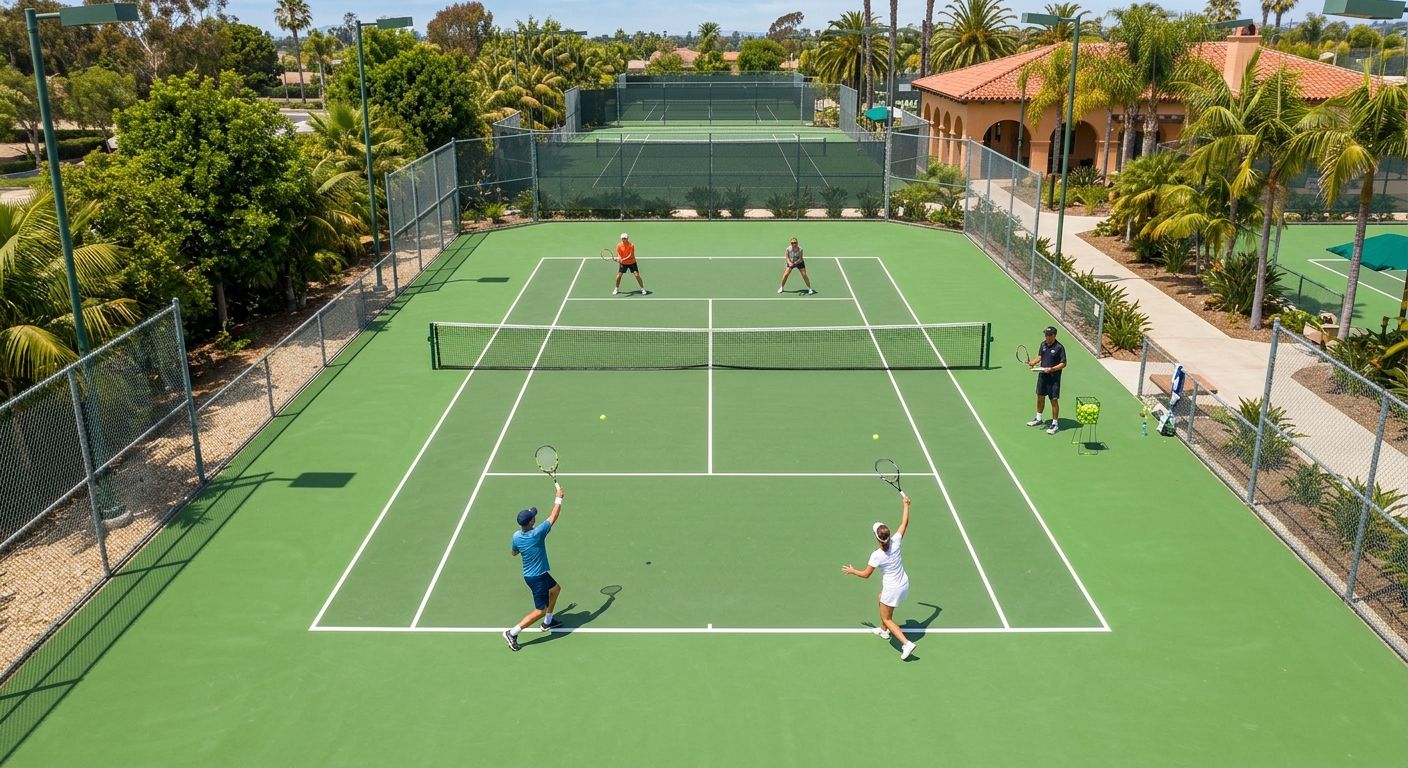
Most adult beginners in Orange County make the same enrollment mistake: they Google 'tennis lessons near me,' click the first result, and sign up before asking a single question about the program's structure. Three weeks later, they're standing on a court with nine other confused adults while an instructor shouts corrections from the baseline.
Finding the best group tennis lessons for adults in Orange County isn't complicated — but it does require knowing what to look for before you hand over your credit card. This guide will walk you through what separates genuinely beginner-friendly programs from everything else, how to evaluate the main program types available locally, and how to make a confident enrollment decision.
What Makes a Group Tennis Program Ideal for Adult Beginners
Here's the thing: adult beginners are not junior players with bigger bodies. Adults learn motor skills differently. They need more explanation, more repetition, and frankly, more patience from an instructor who understands adult learning psychology. A program built for adults should reflect that — in its curriculum design, its pacing, and its class structure.
Structured Beginner Curriculum
A good beginner curriculum doesn't just throw you onto a court and rally. It sequences skills deliberately — grip and stance before groundstrokes, groundstrokes before net play, net play before serve mechanics. The USTA's QuickStart and adult development frameworks are worth knowing about because many certified coaches in Orange County base their beginner programs on these structures.
Ask any program you're considering: 'What does your beginner curriculum cover in the first eight weeks?' If they can't give you a clear answer, that's your answer.
Appropriate Class Sizes
This is where most city recreation programs quietly fail adult beginners. I've seen 'beginner' group classes advertised with up to 12 participants and one instructor. That's a recipe for standing in line, not learning tennis.
Look for programs that cap beginner classes at 4-6 students per coach. At that ratio, you're getting meaningful individual feedback, enough ball contact to build muscle memory, and a coach who can actually see what you're doing wrong. You can learn more about how class size directly affects your development in group lessons — the difference between a 4:1 and 10:1 ratio is not subtle.
Flexible Scheduling for Working Adults
If you work a standard schedule, Saturday morning clinics and weekday evening sessions aren't a luxury — they're a requirement. A genuinely adult-focused program offers multiple time slots, not just whatever's convenient for the facility. Before enrolling, check whether you can actually attend consistently for 8-12 weeks. Sporadic attendance in a beginner program doesn't build skills; it just builds frustration.
Types of Programs Available in Orange County
Orange County has a genuinely diverse landscape of tennis programs. But diverse doesn't mean equal. Here's an honest breakdown of what's available and what each option actually delivers.
City Recreation Programs
Cities like Irvine, Anaheim, and Costa Mesa run adult tennis programs through their parks and recreation departments. The City of Irvine, for example, maintains well-maintained public courts and periodically offers structured adult beginner classes through its community services program.
The appeal is obvious: these programs are affordable, often $10-25 per session, and accessible. But the tradeoffs are real. Class sizes tend to run large, instructor quality varies significantly, and curriculum structure is inconsistent. You might get an excellent certified coach, or you might get a well-meaning volunteer with limited teaching experience.
City rec programs work best as a low-commitment entry point — a way to confirm you enjoy the sport before investing in something more structured.
Private Academy Group Classes
Private tennis academies and dedicated coaching programs represent the other end of the spectrum. These programs typically cost more ($30-60 per session is common in Orange County for group instruction), but the quality controls are meaningfully higher. You're more likely to find USTA-certified coaches, defined beginner curricula, and enforced class size limits.
For adult beginners who are serious about actually improving — not just showing up — private academy group classes consistently outperform city rec options. And when you factor in the value of structured progression versus random skill exposure, the price gap shrinks considerably. (You can also see how group lessons compare to private coaching costs to understand where group instruction fits in the broader pricing landscape.)
Club-Based Clinics
Tennis clubs — including facilities affiliated with USTA Southern California — often run beginner clinics as part of their membership acquisition strategy. These can be excellent, particularly at well-staffed facilities near Irvine, Anaheim, and Newport Beach.
The catch: club clinics frequently blur the line between beginner instruction and general skills clinics. What's advertised as a 'beginner' clinic sometimes includes intermediate players looking for a cheaper option. If you're a true beginner, being grouped with players who can already sustain a rally will slow your development significantly. Always ask how the program screens for skill level before you enroll.
For a deeper comparison of these formats, understanding the difference between group lessons and tennis clinics will help you ask better questions before committing.
How to Match a Program to Your Current Skill Level
Be honest with yourself about where you're starting. Most adult beginners overestimate their baseline — especially if they played casually in college or occasionally rallied with friends. 'Beginner' in a structured program context means you cannot yet sustain a five-ball rally consistently, you don't have an established grip, and serves are essentially unpredictable.
Here's a practical checklist to use when evaluating programs:
| Criteria | What to Look For | Red Flag |
|---|---|---|
| Skill screening | Program asks about your experience level | No intake process at all |
| Curriculum structure | 8-12 week defined progression | 'Drop-in' only format |
| Class size | 4-6 students per coach | More than 8 per coach |
| Coach certification | USTA or PTR certified | No certification mentioned |
| Scheduling options | Multiple weekly time slots | One slot, take it or leave it |
| Beginner-specific | Explicitly designed for beginners | 'All levels welcome' |
If a program checks at least four of these six criteria, it's worth a serious look. If it checks fewer than three, keep searching.
What to Expect in Your First Four Weeks
So you've enrolled. Here's a realistic picture of what a well-designed beginner program should look like in the early weeks — and what common mistakes adult beginners make in their first month that you can avoid.
Week 1-2: Grip fundamentals, court orientation, and basic groundstroke mechanics. You'll hit a lot of balls into the net. That's normal. A good coach is watching your contact point and grip, not just whether the ball goes in.
Week 3: Introduction to basic footwork patterns and the ready position. You should start feeling more comfortable with the forehand and beginning to work on the backhand. Rally length will still be short — that's fine.
Week 4: Basic serve introduction, simple court positioning, and possibly your first cooperative point-play exercises. By now, you should be able to sustain a 6-8 ball rally on a good day.
If you're genuinely lost by week two, say something. A good instructor adjusts. If the program can't accommodate that feedback, it's not the right program for beginners.
Why Choosing a Certified Coach Matters for Beginners
Look, anyone can put up a sign that says 'tennis instructor.' Certification actually matters, especially for beginners, because it's beginners who most need technically sound foundational instruction.
USTA-certified coaches complete standardized training in player development methodology. PTR (Professional Tennis Registry) certification involves practical teaching assessments. These aren't just credentials for a resume — they represent a coach who understands skill sequencing, error correction, and how to communicate technical concepts to adult learners who've never held a racket.
At the Anaheim tennis center and similar facilities across Orange County, you'll find a range of coaching credentials. Don't be shy about asking directly: 'Are your coaches USTA or PTR certified?' If a program deflects that question, trust your instincts.
And frankly, the coach relationship matters more in a group setting than most people expect. In a small group class, the instructor's ability to give individual feedback while managing group dynamics is what separates a transformative beginner experience from an expensive way to practice bad habits.
Ready to Start? Here's How to Take the Next Step
Here's a straightforward action plan for making your decision:
- Identify two or three programs that match at least four of the six criteria in the table above.
- Visit or call — ask about class sizes, coach certifications, and whether they offer a trial session. Most quality programs will accommodate a visit.
- Check the schedule against your actual availability for the next 10 weeks. Consistency is the variable that matters most in early skill development.
- Ask about curriculum — specifically, what will you be able to do after eight weeks that you can't do now?
- Start. The biggest mistake adult beginners make isn't choosing the wrong program — it's waiting another season to start.
If you're ready to stop researching and start playing, enroll in our adult beginner group tennis program designed specifically for adults who want structured progression, small class sizes, and certified coaching in Orange County.
The best program for you isn't necessarily the most famous or the cheapest. It's the one that's built around how you actually learn — and one you can show up to consistently, week after week.