Key Takeaways
- Poaching isn't a reflex — it's a pre-committed decision made before your opponent contacts the ball, based on readable cues.
- The traffic-light framework (Green/Yellow/Red) gives you a repeatable system for deciding when to move, when to read, and when to stay.
- Most club players poach too late because they wait to see where the ball is going instead of deciding before the return is struck.
- Grip shape, racket face angle, and shoulder rotation are the three most reliable pre-contact tells a returner gives you.
- Fake poaching is one of the most underused weapons in club doubles — it costs you zero risk and disrupts the returner's confidence significantly.
- Accepting that some poaches will fail is not a weakness — it's the mindset shift that separates good net players from great ones.
- Structured practice with a partner, not just match play, is the fastest way to build poaching instincts that hold up under pressure.
Most club doubles players treat poaching like a lightning bolt — something that either strikes you in the moment or doesn't. You're standing at the net, the serve goes in, and you either feel the urge to move or you don't. And when you do move, it's usually a half-second too late.
Here's the thing: the players who poach well aren't faster. They're not playing on better instincts. They've built a decision-making framework that kicks in before the ball is hit — and that's a skill anyone can learn.
This article breaks down exactly how that framework works, what cues to read, and how to practice it so it becomes second nature. Whether you're a 3.5 playing club doubles on weekends or a 4.5 grinding USTA league matches, the same principles apply.
What Poaching Actually Is (and What It Isn't)
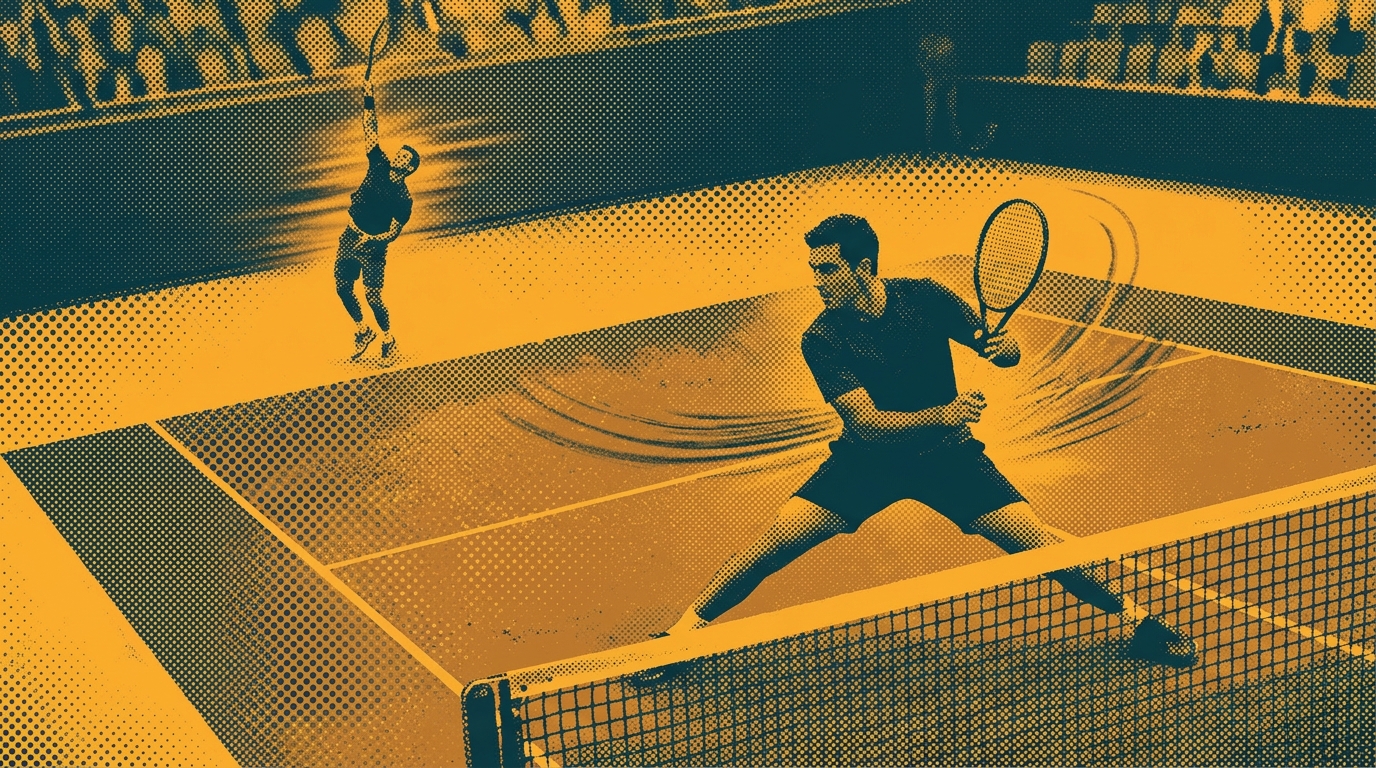
Let's clear something up right away. Poaching — where the net player crosses to intercept a return that would normally go to their partner — is not a gamble. It's not a "feel" play. And it's definitely not something reserved for advanced players.
What poaching is is a calculated interception based on pre-read information. You're not reacting to the ball. You're reacting to the setup — the server's placement, the returner's position, their grip, their backswing — and committing to a direction before contact happens.
What it isn't: lunging across after you've watched the ball leave the racket. That's not poaching. That's chasing. And chasing is why so many attempted poaches end in a missed volley or a ball sailing down the doubles alley you just vacated.
For a broader look at how net positioning fits into your overall doubles game, the doubles positioning and net play strategy guide covers the foundational setup that makes poaching opportunities even possible.
The Real Reason Most Club Players Poach Too Late
The timing problem comes down to one thing: waiting for certainty before moving.
It feels logical. You want to know the ball is coming to you before you commit. But by the time you know, it's too late. The returner has already made contact, the ball is traveling 60+ mph, and you've got maybe half a court-width to cover with a step and a half.
Great net players make peace with uncertainty. They move on probability, not confirmation. And they build that probability assessment from cues gathered in the 500 milliseconds before the returner swings.
The mental switch is this: you're not predicting where the ball will go. You're predicting what the returner is able to do given everything you're seeing. That's a much more reliable calculation.
The Decision Framework: Green Light, Yellow Light, Red Light
I've used this model with players at all levels and it consistently clicks faster than any technical explanation. Think of every service return as a traffic light.
Green Light Situations: When to Move Without Hesitation
Green means commit before the ball is hit — no second-guessing.
These situations include: the server has hit a wide serve to the deuce court (pulling the returner out wide), leaving the middle of the court wide open. The returner is clearly in a defensive position — stretched, off-balance, or on their backhand with a weak grip. Your partner has signaled a poach (in more organized doubles, hand signals are standard). Or you've seen this exact pattern three times already and the returner has gone cross-court every time.
In green light situations, you move as the server tosses the ball. Not after contact. Before it.
Yellow Light Situations: Read First, Then Commit
Yellow means gather one more piece of information, then decide — but decide fast.
This is the most common scenario at the club level. The serve is solid but not dominant. The returner has options. Here you're watching for the one trigger that tips the scale: does their shoulder start rotating toward the middle? Does their racket face close early, suggesting a drive? Is their footwork pulling them into a cross-court angle?
If yes — go. If neutral or unclear — hold.
The mistake in yellow situations is staying in read mode too long. Pick your trigger, watch for it, act on it. One cue. That's it.
Red Light Situations: Stay and Protect Your Court
Red means don't move, period.
The serve was weak or went to the returner's strength. They're in a comfortable, balanced position with full options. Or you've already moved once this game and going again risks leaving the doubles alley completely exposed.
Red light isn't passive. It's a deliberate choice. You're staying home because the math doesn't favor a move — and your job in that moment is to be a wall on your side of the net, not a hero cutting across it.
Reading the Returner Before the Ball Is Hit
The traffic light system only works if you're actually reading the right cues. Here's what to focus on.
Grip and Racket Face Cues
This is the most reliable pre-contact tell. A returner holding a continental or eastern backhand grip on their forehand side is setting up a slice or defensive push — almost certainly cross-court. A full western or semi-western grip suggests topspin and more drive potential, but it also limits their ability to go down-the-line cleanly under pressure.
Watch the racket face at the start of the backswing. If it opens early (face tilts skyward), they're slicing. Slices go cross-court at the club level 80% of the time. Move.
Footwork and Body Rotation Tells
Shoulders don't lie. If a returner's lead shoulder starts pulling toward the middle of the court during their unit turn, the ball is almost certainly going cross-court. If they stay sideways or their hips open toward the net post, they're setting up a down-the-line — your alley.
Footwork is equally telling. A returner stepping into the court with their front foot is loading for an aggressive cross-court drive. A returner stepping back or sideways is in defensive mode — and defensive returns are predictable returns.
(I always tell players: don't watch the ball on the return. Watch the body. The ball will tell you where it went. The body tells you where it's going.)
Fake Poaching: The Underused Weapon That Doesn't Require You to Move
Here's a tactic that gets almost no attention in intermediate doubles coaching: the fake poach.
You take a hard step toward the center as the serve is hit — enough to draw the returner's eye and pull their shot down the line — then recover back to your position. You haven't actually gone anywhere, but you've done two things: disrupted the returner's target selection under pressure, and gathered information about how they respond to movement.
Some returners flinch and go for the alley anyway, even when it's still covered. Now you know they're alley-conscious. Sell the fake again later and actually go next time.
The fake poach is particularly effective in club doubles because most recreational players are already nervous about the net player. A little movement is all it takes to introduce doubt. And doubt at the point of contact kills clean returns.
This kind of tactical thinking pairs well with structured coaching — if you want to build it into your game properly, working with someone who can watch your timing live makes a real difference. You can improve your net game with a doubles coach and get feedback that match play alone won't give you.
How to Practice Poaching With a Partner or Coach
Match play is a terrible place to learn poaching. The stakes are too high and the reps too infrequent. You need a practice structure.
Here's a simple drill that works: one player serves, one returns, the net player's only job is to practice the decision — move or stay. Don't worry about winning the point. Run through 20 return scenarios and debrief after each one. Did you read the right cue? Did you commit early enough? Did you recover properly when you stayed?
For more structured development — especially if you're working on competitive match play — looking into competitive junior tennis tournaments near you or organized USTA formats gives you the match volume where these decisions become automatic.
Another drill worth running: the "signal only" practice. Server and net player agree on a poach before every point — net player will always go, always stay, or go on a specific signal. The returner doesn't know which. This builds the commitment habit without the in-match decision overhead. Once commitment feels natural, layer the decision-making back in.
For players weighing whether private or group formats work better for drilling this kind of tactical skill, USTA junior tennis vs. high school tennis explores how different competitive environments develop different tactical muscles — useful context even for adult players thinking about format.
The Mental Shift: Accepting That You'll Miss Some to Win More Overall
This is the part nobody wants to hear, but it's the most important.
If you're poaching and never missing, you're not poaching enough. A net player who intercepts every ball they go for is being too conservative — only moving on certainties, which means moving too late or too rarely to actually change the match.
The players who genuinely disrupt doubles from the net position accept a certain miss rate as the cost of doing business. They know that three successful poaches and one missed one still wins them the game. The psychological pressure they create on the returner — who now has to think about the net player on every return — is worth the occasional empty lunge.
In my experience, the mindset shift is this: stop measuring yourself on individual poaches and start measuring on whether the returner is making errors they wouldn't make with a static net player. That's the real outcome you're after.
The traffic light framework helps here too, because it gives you a rational basis for each decision. When you miss a green light poach, you can say "I made the right call with the information I had." That's a very different feeling than missing a desperate lunge — and it keeps you willing to commit on the next one.
Making It Stick
Poaching well in doubles is genuinely a learnable skill. It's not about being quick-twitch or playing at a high level — it's about building a decision system and training it deliberately.
Start with the traffic light framework. In your next match, don't try to poach more. Try to categorize every return situation as green, yellow, or red. Just the awareness exercise will change how you see the net position.
Then add the reading layer. Pick one cue — grip or shoulder rotation — and watch for it on every return. Don't move on everything you see. Just notice it.
After a few sessions of awareness, start acting on green lights only. Build from there.
And if you want to accelerate the process significantly, get some dedicated court time with someone who can watch your positioning and timing in real time. The concepts in this article are a solid foundation — but live feedback is what converts framework into instinct.