The Hot Towel Shave, Explained in Plain Terms
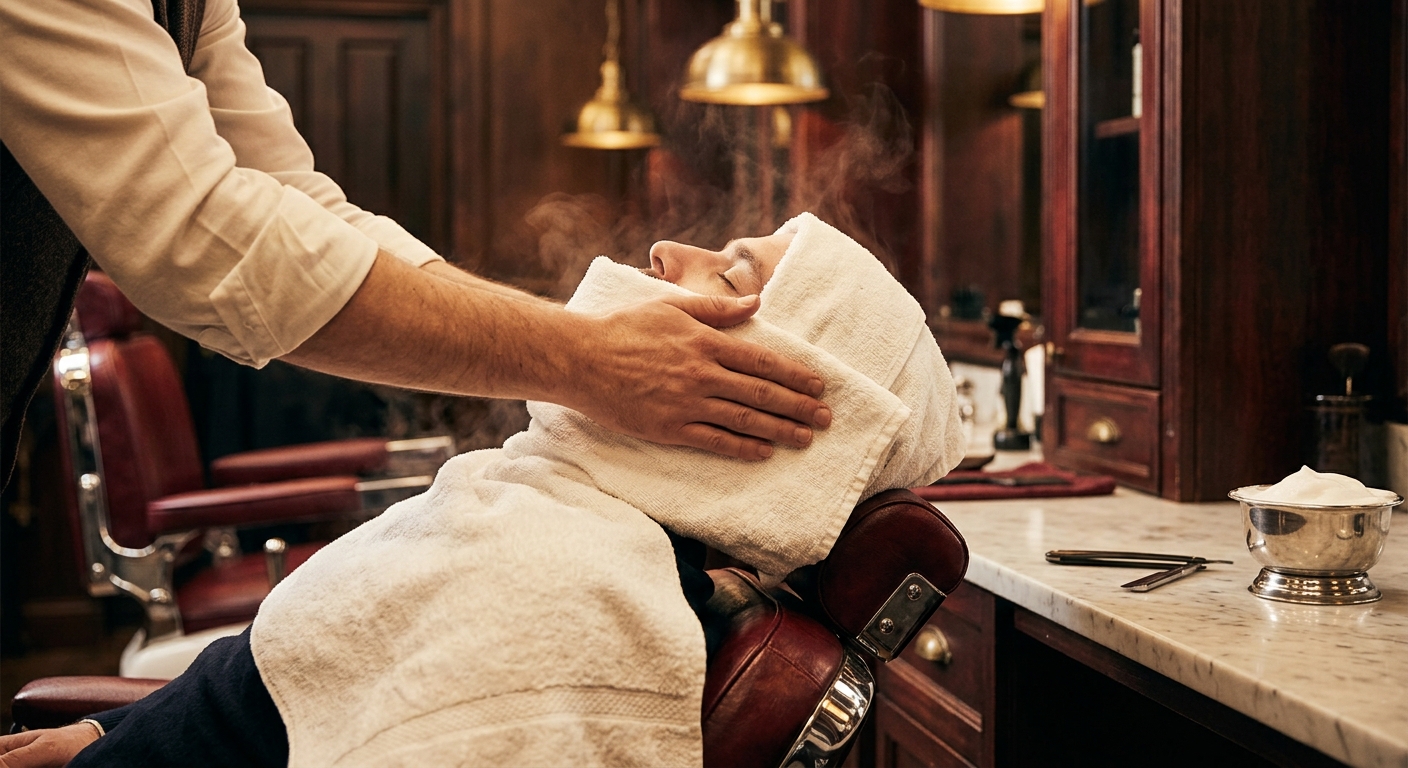
You've seen it in movies — the reclined chair, the steaming towel draped across a man's face, the glint of a straight razor. Maybe you've walked past a Turkish barbershop and glimpsed the ritual through the window. But if you've never actually paid for one, you're probably wondering: what's the difference between this and the five-minute buzz job most guys get?
A hot towel shave isn't just a shave with a warm towel thrown in for ambiance. It's a multi-step process that treats your face like a precision instrument, not a lawn that needs mowing. The towel itself — soaked in water hot enough to make you wince slightly — is the opening act. It sits on your face for several minutes, doing actual work: opening pores, softening coarse beard hair at the root, and prepping your skin for a blade that's going to pass over it multiple times without guard rails.
The entire service takes 20 to 40 minutes depending on the shop. You're not in and out. You're paying for time, technique, and the kind of attention to detail that doesn't scale to a packed Saturday morning schedule.
Here's what actually happens — and whether the extra $20 to $40 over a standard shave is money well spent or just theater.
Step by Step: What Actually Happens in the Chair
The Prep: Why the Towel Comes First
The hot towel isn't decoration. It's functional.
When a barber wraps your face in a towel that's been steamed or soaked in water heated to around 130-140°F, your pores dilate. Beard hair — which is thicker and coarser than the hair on your head — absorbs moisture and softens. This makes it easier to cut cleanly at the surface without tugging or requiring multiple passes that irritate skin.
Most barbers will apply a pre-shave oil before the towel goes on. The oil (usually a blend of jojoba, argan, or grapeseed oil) creates a thin barrier between your skin and the blade, reducing friction. The heat from the towel helps the oil penetrate.
The towel stays on for 3-5 minutes. Some shops use two towels in succession. If you're at a traditional Turkish barber, they might also do a quick facial massage or scalp massage while the towel works — not because it's relaxing (though it is), but because it increases blood flow to the skin, which improves the quality of the shave.
This is where you start to understand why the process takes longer. The prep work is half the service.
The Lather, the Blade, and the Aftercare
Once the towel comes off, the barber applies shaving cream or soap — usually whipped into a thick lather with a badger-hair brush. The brush itself matters. It exfoliates dead skin cells and lifts the hair away from your face, creating a smoother surface for the razor.
Then comes the straight razor.
A proper straight razor shave uses a single-edge blade — either a traditional straight razor that's been stropped on leather, or a shavette (a straight razor with replaceable blades). The barber makes multiple passes: with the grain first, then across the grain, sometimes against it depending on your hair type and skin sensitivity.
Between passes, another hot towel. This removes excess lather, re-softens the hair, and gives the barber a clean canvas to assess what still needs attention.
After the final pass, a cold towel closes the pores. Then comes aftershave — usually an alcohol-based splash or a balm, depending on your skin type. Some barbers finish with a light moisturizer or a dab of alum (a mineral astringent that stops any micro-cuts from bleeding).
The entire sequence is deliberate. There's no rushing through it without compromising the result.
Why Turkish Barbers Became the Gold Standard for Straight Razor Shaves
The Tradition Behind the Technique
If you ask most men where to get the best hot towel shave, they'll point you toward a Turkish barbershop. There's a reason for that.
In Turkey, barbering isn't just a trade — it's a centuries-old craft passed down through apprenticeships. Young barbers spend years learning how to hold a straight razor at the correct angle (about 30 degrees to the skin), how to stretch the skin taut without causing discomfort, and how to read a client's face for areas that need extra care.
The Turkish barber specializes in straight razor shave techniques that most American or European barbers don't learn in cosmetology school. They're trained to shave not just the face, but the cheeks, neck, and even the edges of the ears with surgical precision. The hot towel shave ritual is standard operating procedure, not an upsell.
Turkish barbers are also known for traditional shaving techniques that go beyond the blade. The scalp massage that happens during the towel prep isn't a luxury add-on — it's part of the service. Same with the face massage that follows the shave. These aren't just for relaxation. They stimulate circulation, which helps reduce razor burn and keeps skin looking healthier long-term.
If you've ever wondered why Turkish barbershops have a reputation that other shops don't, it's because the baseline expectation is higher. A mediocre shave at a Turkish barber is still better than a good shave at most chain salons.
Ear Candling and Other Services You Might Not Expect
Walk into a Turkish barbershop and you might see things you didn't know were part of a haircut: ear candling, nose hair removal with a flame, eyebrow threading.
Ear candling — where a barber briefly passes a flame near your ear to burn off fine hair — looks dramatic but it's quick and painless. Same with singeing stray nose hairs or the fuzz on your ears. These aren't gimmicks. They're finishing touches that create a polished result you can't get with clippers alone.
Some Turkish barbers also offer a face mask or a cucumber treatment after the shave. It sounds spa-like, but it's practical: these treatments reduce redness and soothe skin that just had a blade dragged across it multiple times.
Not every Turkish barber offers all of these services, but most offer more than just a shave and a haircut. If you're paying $40-60 for a hot towel shave, you're usually getting a full grooming experience — not just 10 minutes with a razor.
The Skin Benefits: What the Steam and Heat Actually Do
Let's talk about what the hot towel shave actually does for your skin — beyond just making the shave smoother.
The steam from the towel hydrates the outer layer of your skin (the stratum corneum), which makes it more pliable. This reduces the risk of nicks and cuts because the blade glides over a softer surface. It also helps the razor cut hair cleanly at the surface instead of pulling or tugging, which is what causes ingrown hairs.
The heat dilates blood vessels just beneath the skin, increasing circulation. Better circulation means more oxygen and nutrients reach skin cells, which speeds up healing if you do get a nick. It also gives your face a healthier appearance — less dullness, more even tone.
Here's what the hot towel doesn't do: it doesn't exfoliate deeply, it doesn't unclog pores long-term, and it won't fix chronic skin issues like acne or rosacea. If you have sensitive skin or a condition like eczema, the heat can actually make things worse by stripping natural oils and increasing inflammation.
For most men, though, the skin benefits are real:
- Fewer ingrown hairs (because the blade cuts cleanly)
- Less razor burn (because the skin is prepped properly)
- Smoother result that lasts longer (because the shave is closer)
If you shave at home with a cartridge razor and no prep, you're not getting any of this. The difference is noticeable within 24 hours.
Hot Towel Shave vs. Standard Razor Shave: When Each Makes Sense
So when is a hot towel shave worth the extra cost, and when should you just stick with a standard razor shave?
Get a hot towel shave if:
- You have coarse, thick facial hair that's hard to shave cleanly at home
- You're prone to ingrown hairs or razor bumps
- You have a special event (wedding, photo shoot, job interview) and want your face to look its absolute best
- You want the experience — the ritual, the relaxation, the 30 minutes where someone else does the work
- You've never had one and you're curious what the hype is about
Stick with a standard razor shave (or shave at home) if:
- You have sensitive skin that reacts badly to heat or multiple blade passes
- You're on a tight budget and the extra $20-40 isn't worth it for a result that lasts the same amount of time
- You shave every day and a hot towel shave would be overkill
- You're happy with your current routine and don't feel like you're missing anything
Here's the honest verdict: a hot towel shave feels better and looks slightly better for about 24-48 hours. After that, you're back to stubble just like you would be with any other shave. The real value is in the process — the prep work, the precision, the fact that someone who knows what they're doing is handling a sharp blade near your face.
If you're the kind of person who sees a haircut as a maintenance task you want over with quickly, a hot towel shave probably isn't for you. If you treat grooming as something worth doing right, it's worth trying at least once.
For most guys, the sweet spot is getting a hot towel shave once a month or for special occasions, and handling daily maintenance at home. You get the best of both worlds without blowing $50 every week.
How to Find a Barber Who Actually Knows How to Do This
Not every barbershop that advertises a "hot towel shave" actually does it well. Here's how to separate the real craftsmen from the shops that are just checking a box on their service menu.
Look for these signs:
The barber asks about your skin type and shaving habits before starting. If they don't ask, they're not customizing the service — they're running through a script.
They use a straight razor or shavette, not a cartridge razor with a hot towel thrown in. A hot towel shave with a Gillette Fusion isn't a hot towel shave. It's a regular shave with a warm towel.
The service takes at least 20 minutes. If it's over in 10 minutes, corners were cut. Literally.
They strop the razor in front of you. This is a sign they're using a traditional straight razor and they know how to maintain it. If they pull out a disposable blade and don't strop, it's not necessarily bad — but it's not the full experience.
They do multiple towel applications. One towel at the start isn't enough. You should get at least two hot towels (one before, one between passes) and a cold towel at the end.
The shop has reviews that specifically mention the shave. Generic five-star reviews that say "great haircut" don't tell you anything. Look for reviews that mention the hot towel, the straight razor, the attention to detail.
If you're in a city with a Turkish barber community, start there. If not, look for barbershops that specialize in traditional services — the kind of place that also offers shoe shines, straight razor neck cleanups, and beard trims with scissors and a comb.
Avoid chain salons. They don't train barbers in straight razor work, and the business model doesn't allow for 30-minute services. You'll get a mediocre version of the real thing.
When you find a barber who does it right, book a session and see for yourself. The first time, you'll notice the difference immediately. Whether you become a regular or stick to once-in-a-while depends on your priorities — but at least you'll know what you've been missing.
If you're ready to try the real thing, book a barbershop that offers straight razor services and experience what a proper shave feels like. And if you're planning to pair a clean shave with a fresh haircut, check out what haircut to pair with a clean shave to see which styles work best with a sharp jawline.